- 1 of the last
- Free-flowing rivers left in Southern California
- 192 acres
- Coastal estuary the river drains to at Camp Pendleton
- Endangered
- Steelhead — federally listed, and state-listed in 2024
A rare, free-flowing river
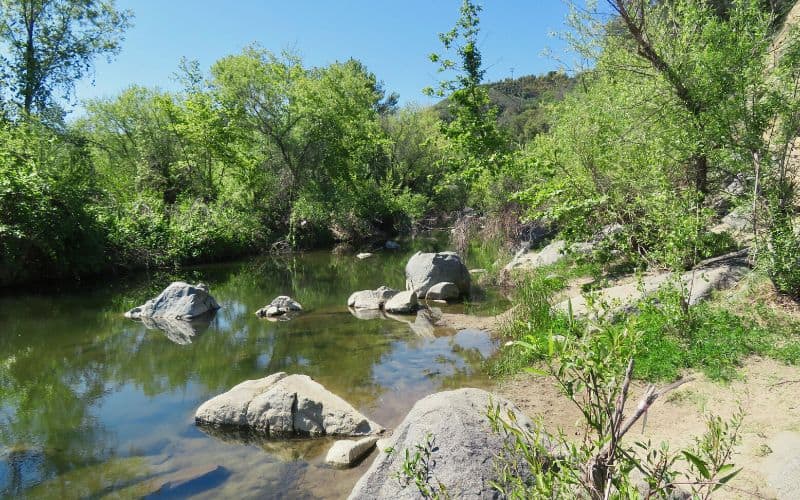
Temecula Creek is a tributary of the Santa Margarita River — one of the last free-flowing rivers in Southern California. It runs about 29 miles from the Santa Ana Mountains, through natural riparian habitat, to a 192-acre coastal estuary at Camp Pendleton. Its watershed is a wildlife corridor between the Santa Ana Mountains and inland San Diego, home to roughly 1,000 plant and animal species and some of California's largest remaining stands of coastal sage scrub. [1] [2]
It is also heavily protected: its middle reaches are managed as the Santa Margarita Ecological Reserve (about 4,334 acres) and a 1,384-acre river trail preserve, and the estuary it feeds is valuable enough — and stressed enough — to sit on the Clean Water Act's list of impaired waters. [1] [2]
- Santa Margarita Ecological Reserve · SDSU / BLM / CDFW / TNC~4,334 ac
- River Trail Preserve · protects ~5 river miles1,384 ac
- River estuary · at Camp Pendleton192 ac
The Santa Margarita system is protected from its middle reaches to the coast — an ecological reserve, a river-trail preserve, and a coastal estuary — exactly the kind of conserved corridor a new transmission crossing would disturb. [1] [2]
An endangered fish — on a river being restored
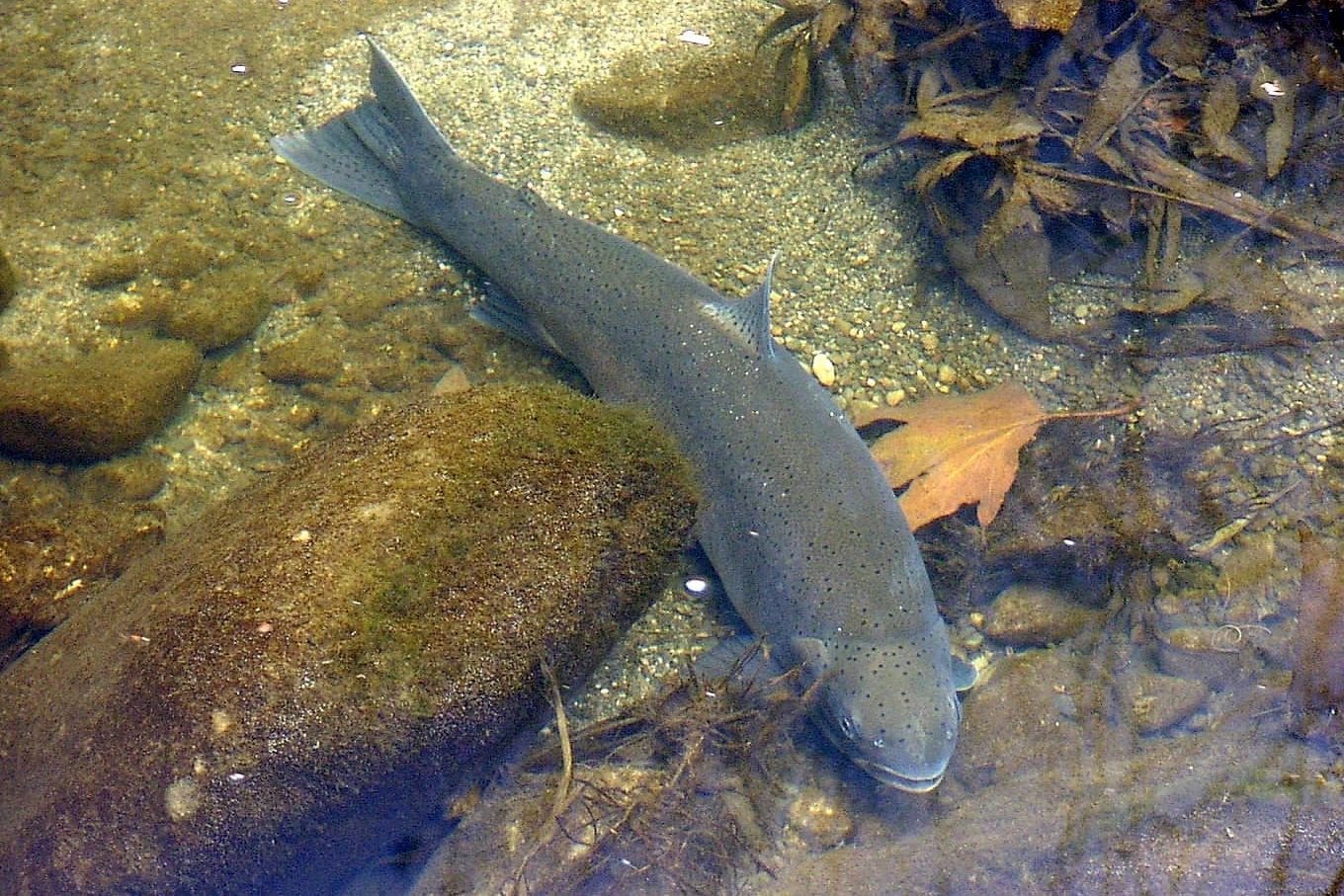
The Santa Margarita is designated critical habitat for the Southern California steelhead, a fish federally listed as endangered since 1997. In April 2024, California added its own protection, listing the steelhead as endangered under the state Endangered Species Act too. [3] [4]
This is not a written-off river — it is an actively restored one. Conservation groups and agencies are working to bring steelhead back, including by reducing sediment in the channel and removing barriers that block the fish from miles of upstream habitat; California Trout notes NOAA ranks it a top-priority recovery river. A new crossing that stirs up sediment and disturbs the streambed works directly against that public investment. [5]
A native turtle in the same water
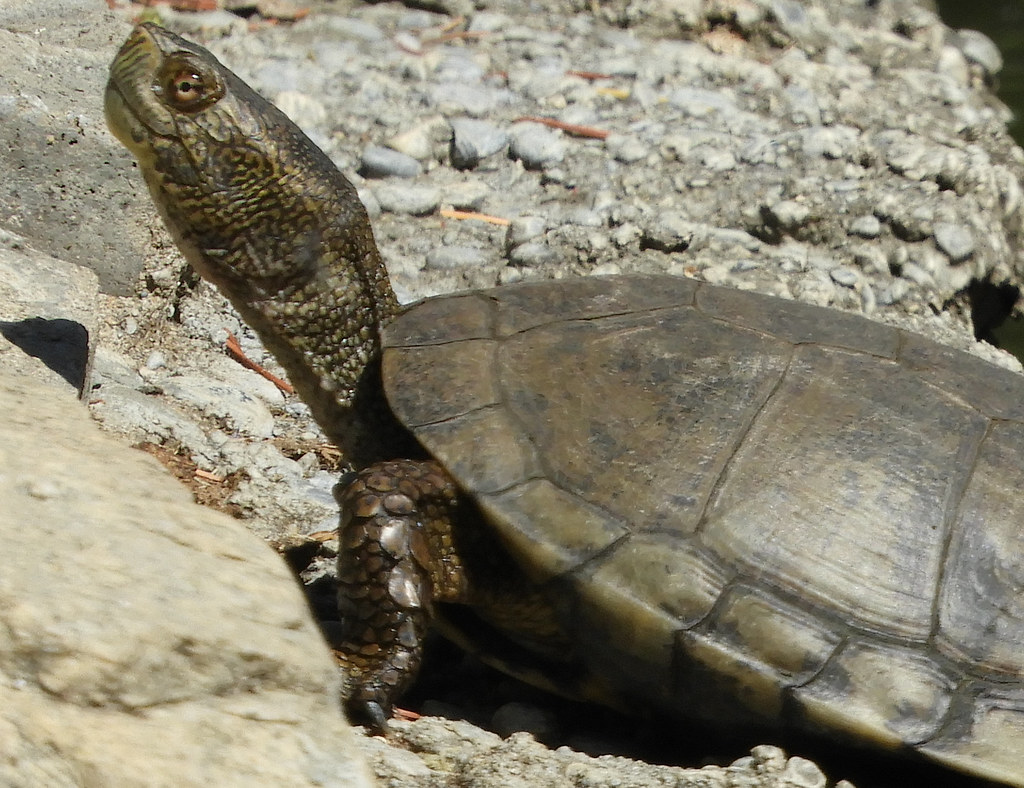
The steelhead isn't the only native the river shelters. The Southwestern pond turtle — the only freshwater turtle native to this part of California — basks on the logs and rocks along these banks. It is already slipping: California lists it as a Species of Special Concern, and in 2023 the U.S. Fish & Wildlife Service proposed listing it as threatened under the Endangered Species Act, citing drought, habitat loss, and predation by non-native species. [6] [7]
It is not yet a federally listed species — the listing was proposed, not finalized — but the warning is the same one this whole corridor keeps sounding. A turtle that nests in the soft soil at the water's edge and basks where the bank meets the channel is exactly what cleared banks, heavy equipment, and a sediment-laden creek crossing push out. [6]
What the construction would do
The project's own construction diagrams show tower footings bored roughly 50 feet deep — below the water table — across the creek. Boring and dewatering at that depth can release sediment, drilling fluids, and concrete into the water, and lower the local groundwater while work is underway. [9]
The damage isn't only at the towers. Reaching them means driving heavy equipment through the riparian zone and building miles of new access road, plus permanently clearing vegetation in a right-of-way more than 250 feet wide — fragmenting the very wildlife corridor the creek provides. These are exactly the impacts to habitat and endangered species covered on our habitat and wildlife page. [9]
A gauntlet of water permits
Crossing these waters is not a single approval — it triggers several, and each is a separate point where the project can be conditioned, delayed, or pushed off the river. A Clean Water Act §404 permit from the Army Corps of Engineers for any dredging or fill; a §401 water-quality certification (plus state Porter-Cologne coverage) from the Regional Water Quality Control Board; and a §1602 streambed-alteration agreement from the California Department of Fish and Wildlife. [8]
Because the downstream estuary is already an impaired water body, anything that adds to its pollutant load draws heightened scrutiny — and boring tower footings through a living creek is exactly the kind of harm these laws exist to stop. [2] [8]
Sources
- [1]Santa Margarita River & Santa Margarita Ecological Reserve — Wikipedia / SDSU Field Station Programs / Western Rivers Conservancy / San Diego RWQCB
- [2]Santa Margarita River Estuary (TMDL program) — San Diego Regional Water Quality Control Board
- [3]Southern California Steelhead (Oncorhynchus mykiss) — NOAA Fisheries (National Marine Fisheries Service)
- [4]Southern steelhead listed as endangered under California's Endangered Species Act (CESA) — California Trout / California Fish and Game Commission
- [5]Santa Margarita steelhead recovery — Ecological Reserve habitat improvement & fish passage — California Trout / SDSU Field Station Programs / The Wildlands Conservancy
- [6]U.S. Fish and Wildlife Service proposes federal protections for both species of western pond turtle under the Endangered Species Act — U.S. Fish & Wildlife Service
- [7]Southwestern Pond Turtle (Actinemys pallida) — conservation status — CaliforniaHerps.com (Gary Nafis)
- [8]Water-crossing permit framework — CWA §404/§401, Porter-Cologne, CDFW §1602 — U.S. EPA / U.S. Army Corps of Engineers / San Diego RWQCB / California Dept. of Fish & Wildlife
- [9]Temecula City Council presentation, May 26, 2026 (agenda item 19, AR-26-198) — SDG&E Golden Pacific Powerlink — City of Temecula